Saturday, January 28, 2012

How Much Time for Iran?

Matthew Koenig wrote a compelling article in Foreign Affairs outlining the arguments in favor of military action against the Iran nuclear program.  He restates a valid argument that has been clear to many Iran watchers for quite some time.  However, his comments regarding the underground enrichment facility near Qom got my attention.  He states that this facility ‘represents a more challenging target’ because it is built into a mountain, and well defended against attack.  Despite this, he argues that the US does not need to destroy it in order to achieve the purposes of significantly retarding Iran’s pursuit of nuclear weapons.  He reaches this conclusion based on the current presumption that the Qom facility “contains little nuclear material” and, therefore, does not yet represent a significant facility.
More to the point, the Wall Street Journal on Friday reported the Pentagon’s acknowledgment of this shortcoming of U.S. ordinance against heavily fortified underground facilities.  Meanwhile, Iran announced in early January that enrichment activities had commenced at the Qom facility, which has a reported capacity of 3,000 centrifuges – or enough to produce material for 1 to 2 nuclear weapons per year.  
Collectively, these reported facts indicate that Iran is entering (or very close to entering) a window of time when it can enrich uranium and advance its pursuit of nuclear weapons while the U.S. cannot meaningfully threaten or undertake effective military action to stop it.  Ineffective U.S. policy, and an unwillingness by political leadership to make difficult decisions, has led us to this extremely dangerous period.

REFS:


Wednesday, January 4, 2012

To negotiate or not to...


After attempting to increase tensions with the West and in the region by conducting Naval exercises and making bellicose threats to close the Straight of Hormuz, Iran has now offered to reengage the international community in negotiations over its nuclear program.  Entering negotiations would not only be ineffective in addressing Iran’s nuclear ambitions, but also play into Tehran’s hands. 

Some view this latest offer as the result of effective international sanctions that shaped Iran’s behavior and forced them to the table.  Based on news reports, existing sanctions seem to have the desired effect on the Iranian economy, and the threat of an oil embargo and financial sanctions by Europe and the US will further hurt the Iranian economy.  However, this offer should be considered a shrewd political maneuver to create a patina of compromise and cooperation as the regime enters what may prove to be a very dangerous few months.  

In March, Iran will hold its first country wide elections since the 2009 Presidential election and the subsequent crackdown.  The first anniversary of the Arab Spring and likely ongoing violence in Syria will serve as a backdrop to an election process that will omit dissenting voices, and be anything but free, fair and open.  The world will watch those elections closely, and Tehran is preparing to manage the global reaction to any political dissent and subsequent violence. 

Iran likely calculates that the existence of negotiations with the West will free their hands to respond more forcefully and decisively to any unrest.  In the past, Western governments have demonstrated an unwillingness to pursue sanctions or meaningful responses to even unconnected Iranian behavior when nuclear deal making is afoot.  The 2009 crackdown after the Iranian Presidential election is a case in point.  The Obama Administration remained quiet in the face of regime violence largely to avoid angering Tehran in the slim hope that engagement could settle the nuclear issue.   

Regardless of Iran’s true intentions, one thing is clear; they are not yet prepared to seriously negotiate over their nuclear program.  Their statement underscores this point by declaring the absence of “preconditions from the Iranian side”.  In diplomatic terms this cuts both ways, and announces Iranian unwillingness to accept any preconditions proposed by the West; preconditions such as ceasing enrichment activities.  If Iran were seriously intent on reaching an agreement, then preconditions, particularly those targeted on the fuel cycle, would not be so jealously guarded and declared from the outset.

The result is negotiations that would stop the imposition of new and more effective sanctions, undermine a meaningful response to a likely regime crackdown against domestic political dissent, all the while achieving no agreement that would slow or stop Iran’s nuclear program.  This would be a blow to the United States’ ability to lead effective and decisive international actions to achieve either regime change or eliminate the Iran nuclear program. 
 
REFS:
http://www.washingtonpost.com/world/middle-east/report-iran-to-propose-new-round-of-nuclear-talks-with-six-world-powers/2011/12/31/gIQANOIxRP_story.html

http://www.nytimes.com/2012/01/01/world/middleeast/iran-asks-to-resume-talks-on-its-nuclear-program.html

Wednesday, December 28, 2011

Communism, has it ever built a good car?

The confluence of two of my favorite subjects, international politics and cars, remains rare.  So today I was excited to see the parade of limos in the DPRK carrying Kim Jong-Il to his burial.  Anticipating that these were rare and well preserved Soviet-era limos, I set out to identify them, but a more astute car observer had already determined that these were in fact 1975 Lincoln Continentals!  More here:  http://reaganiterepublicanresistance.blogspot.com/2011/12/kim-jong-il-funeral-limos-epitome-of.html


I'm annoyed by this, and hold out hope that these were knock-offs produced along-side supernotes in a bunker buried high in the mountains.  The hardcore DPRK watchers can read some kind of symbolism into this, but for me it's an excuse to post a classic clip of Top Gear where Jeremy and James ask the question; 'communism, has it ever built a good car?'
http://www.topgear.com/uk/videos/communist-cars-1

Friday, December 23, 2011

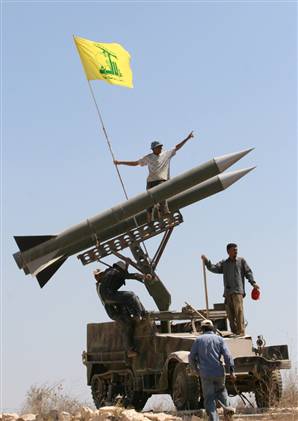
Hezbollah's Dilemma

I have been meaning to post this article for a few weeks.  It covers a lot of ground, but provides a particularly good perspective on the dilemma facing Hezbollah as it manages its response to the uprising in Syria


To summarize, Hezbollah’s dilemma is as follows.  Aggressively supporting its critical ally would bring significant political costs.  Defending the Assad regime’s violent crackdown would align Hezbollah against the popular revolts across the Middle East, and would undermine their claim to the mantle of defending the oppressed and the weak. 

This is yet another strong reason in favor of more decisive action and leadership by the US to hasten Assad’s exit.  Focusing greater attention on regime violence would ratchet pressure on Syria and further threaten the regime’s existence.  This, in turn, would press Hezbollah further onto the horns of their dilemma.  The outcome may not prove decisive for Hezbollah, but if it emerges from this ordeal weakened (either politically or militarily), all the better for Lebanese and regional stability.  This would be a good outcome for US interests. 

Unfortunately, after yesterday’s suicide bombing in Damascus, Western governments’ already tepid enthusiasm for regime change in Syria may cool further.  Attribution of the attack will help determine how their diplomatic efforts evolve.  In the great tradition of the Middle East, each of the significant players in this drama has already detailed a conspiracy to cast blame on different perpetrators.  The Syrians blamed Al-Qaeda in order to frighten the West and the Arab League as to what awaits them in a post-Assad Syria, the Lebanese claim the Assad regime conducted the blast for the express purpose of blaming Al-Qaeda, and Hezbollah blamed the US because that’s what they do.  I’ll be watching to see what the Israelis have to say.

Sunday, November 20, 2011

Obama's Strategic Failure

Effective national strategy aligns military, diplomatic, political and economic capabilities to achieving clearly articulated security objectives.  This week President Obama toured Asia and reiterated the United States’ commitment to Asia.  He also expanded critical security alliances, most notably agreeing to station US Marines in Australia.  Meanwhile, at home, the clock is expiring on the super committee process which would all but guarantee an additional round of cuts to the Pentagon of up to $600 billion.  This would bring the total cuts for 10 year at the Pentagon to more than a trillion dollars.  To put these cuts into perspective, Obama’s own Secretary of Defense has repeatedly and unreservedly declared that they would ‘hollow out’ the US military.  A major disconnect between this Administration’s military and diplomatic commitments and its economic priorities has emerged.  Clearly national strategy escapes this President and his Administration.  
Expanding US security commitments while simultaneously allowing massive reductions to our military’s capability and effectiveness represents the beginning of a strategic disaster for the United States.  This failure is made starker by the fact that the Obama Administration played almost no role in the super committee process.  It would be one thing if they engaged in the committee process to help find ways to maintain funding for the Pentagon, but they have done the opposite and essentially stayed out of the process.  This dearth of leadership has emerged as a pattern for this Administration, and the eventual GOP nominee would do well in the general election articulating an alternative approach of robust leadership both domestically and globally.  
I support an enhanced US presence and commitment in Asia, but this requires the funding of a military that can provide the backbone to those commitments.  Expanding security alliances with Australia and Japan is central to defending US interests in the region, and developing our security relationships with other states in Southeast Asia will all help shape a peaceful rise of China.  However, to make these commitments while allowing unsustainable cuts to our military budgets is short sighted and dangerous.  

Tuesday, October 25, 2011

Welcome

I hope to use this space to shed light on the political dynamics driving decision and policy making on issues critical to US national security. This primarily means examining the relationship between US domestic politics and our foreign and defense policies.  I plan to also explore international politics and institutions. 
I started this blog as I believe that my career experience and education will contribute another informed voice to these important debates. I don't plan to parrot what I read elsewhere, but genuinely provide another informative and insightful point of view.  I welcome your comments!